Bangladesh
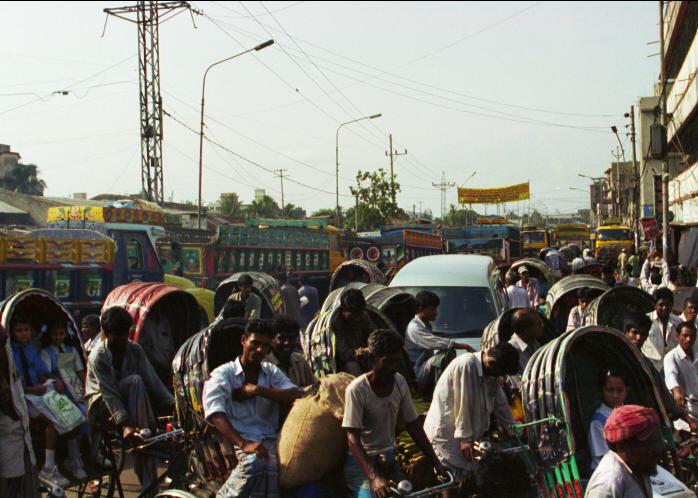
Bangladesh is a bit of a funny place. Firstly there are almost no foreign tourists which is both a good and a bad thing. It is good as it means that the locals are hospitable and inquisitive. This can become a little overwhelming, when walking through the main bazaar in Dhaka (the capital) it came to a standstill as the locals were so intrigued by myself and my friend 'Bones', the same thing happened in the ship breaking yards in Chittagong, where work stopped. The people were all generous to a fault except for a couple of tradesmen and beggars and it has to rate as probably the strangest place I have visited.There are few historical sites in this country, but one of them is this old mosque in the south-west. As you can see from the picture the boys were eager to be photographed. In some countries it is difficult to take pictures of people without upsetting them, in Bangladesh one has to be quick to take a picture without people posing in it.

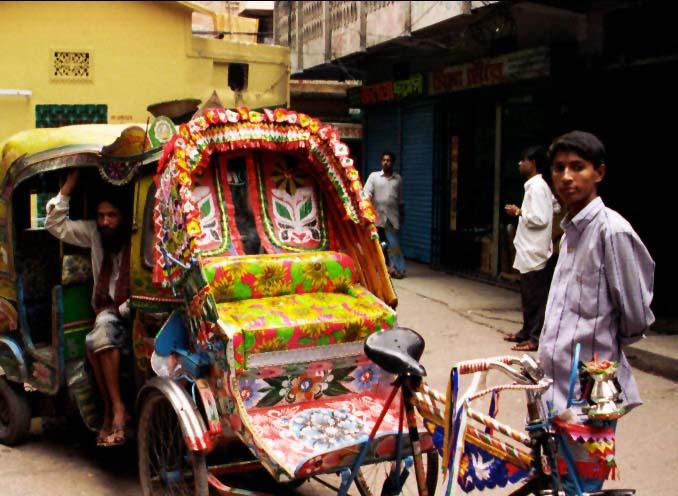
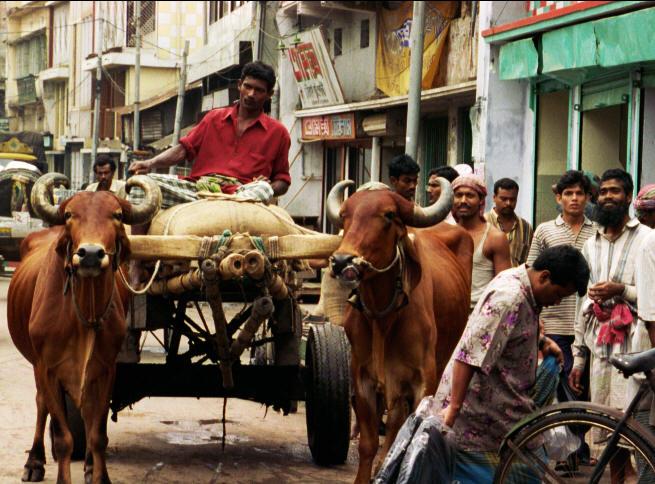
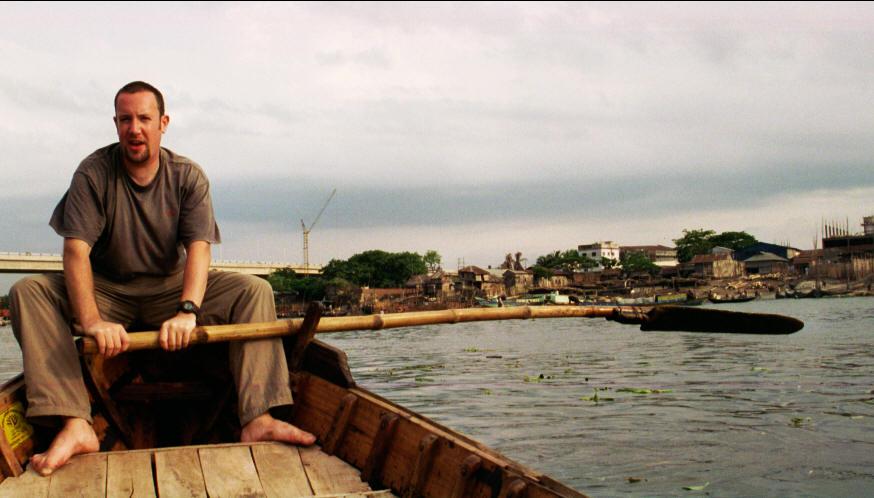
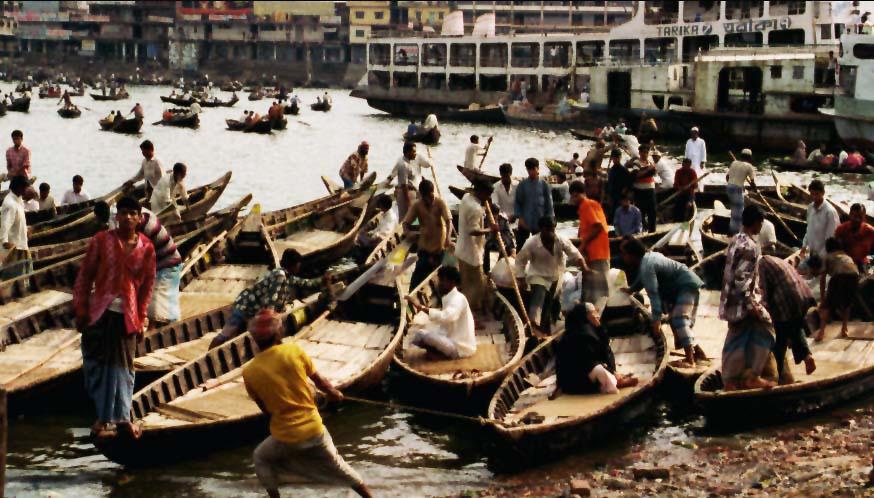
All forms of transport are used in Bangladesh, colourful rickshaws (photo 1), oxen (photo 2), cars, buses and aeroplanes, but the most common is the boat. These come in all shapes and sizes and are almost always precariously overloaded (photos 3 & 4) navigating the delta that covers most of the country.
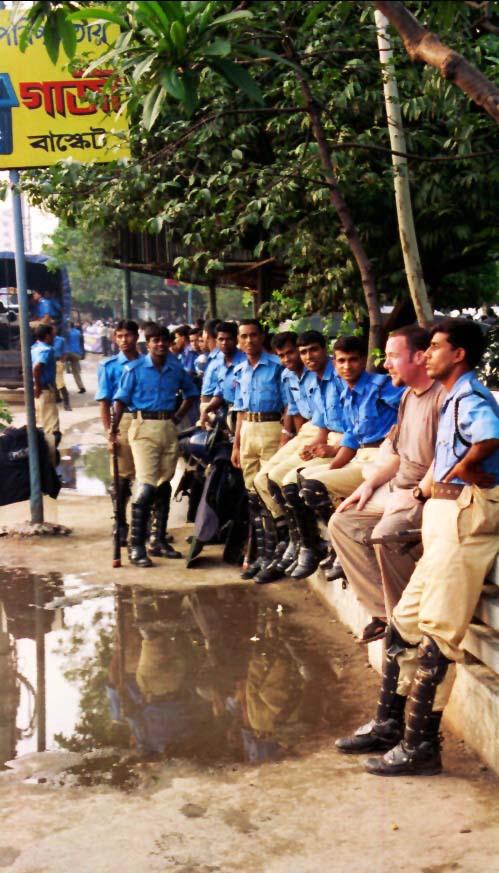
When I was there it was just before a general election and where I was staying in Dhaka was just around the corner from where many of the political speeches are made. As a result this is where riots regularly break out. Between riots I took the opportunity to try and get to know the riot police who all seemed very pleasant.
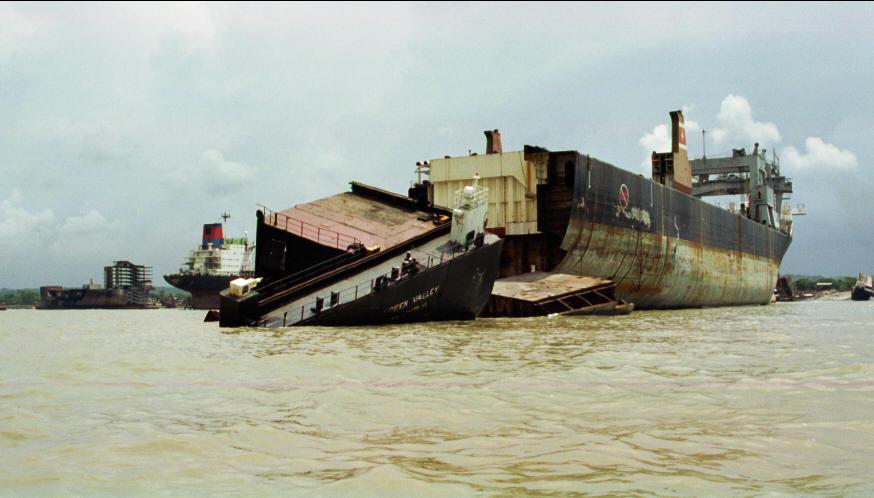
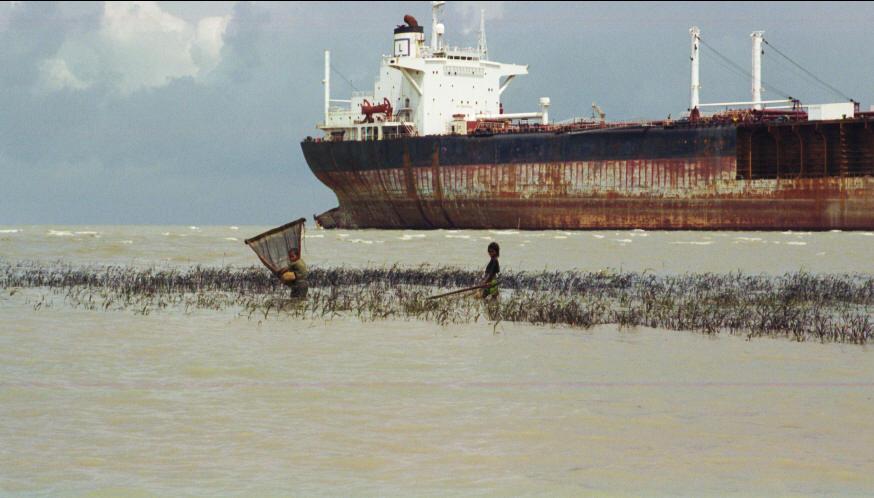
In Chittagong, the second city, which is in the south-east of the country there is a ship breaking yard that breaks up supertankers, container ships and cruise liners down to reusable stock. The only places this is done is in Bhandavgarh - India, Karachi - Pakistan and in Chittagong. These gargantuan boats are torn apart for everything possible (photos 1-4), from toilet seats and foreign video cassettes to the steel they are built from. Much of this stuff is then sold at the side of the road leading away from the area. The most amazing thing is the lack of modern machinery used, the ships are stripped of everything loose whilst still afloat, then intentionally run aground. Then the workers cut the hulk to pieces using manpower and oxy-acetylene torches and a thick steel cable is attached to the hulk which is dragged closer to the beach by a massive winch. Many environmental and human rights groups have protested these practices as the workers slave away in appalling conditions many pollutants, particularly oil are washed into the local water. The saddest thing I saw was a couple of children fishing in an oil slick, even if they did catch anything it would most likely do more harm than good (photo 5).



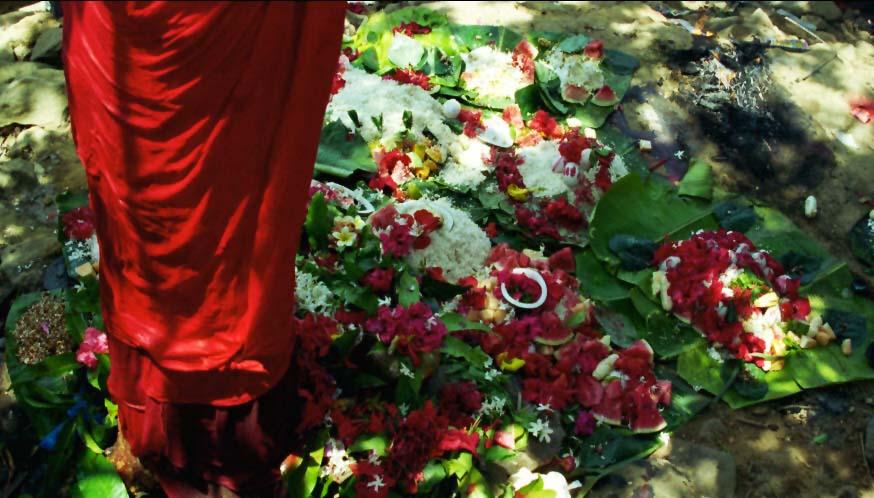
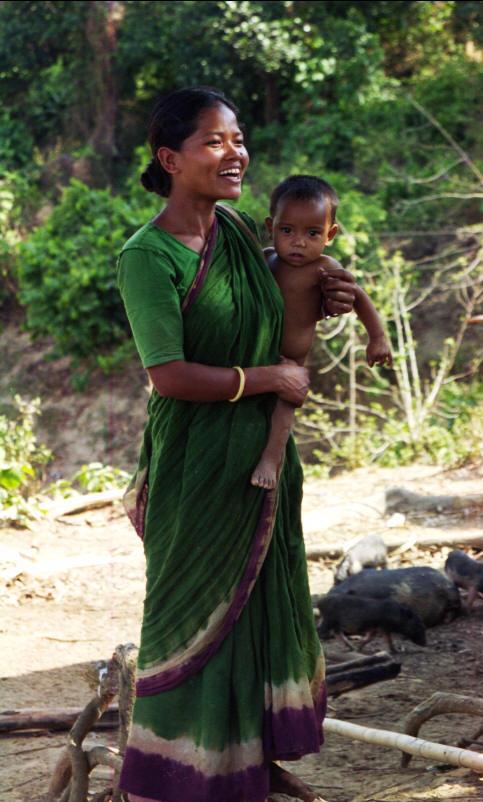
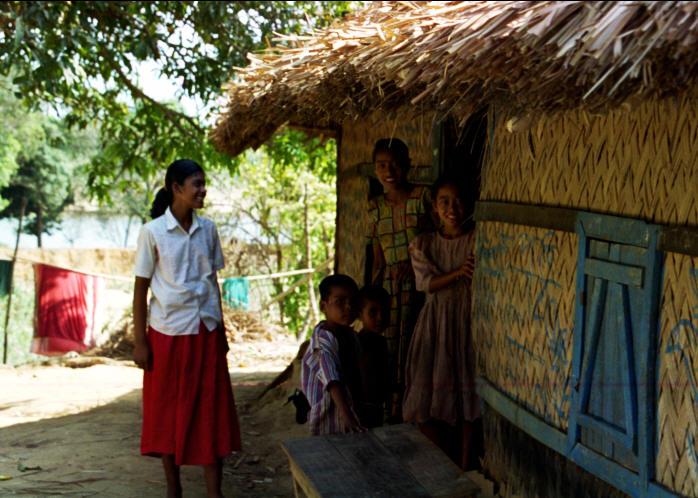
Not far from Chittagong on the eastern edge of the country around the Rangamati area is a different ethnic group. These people are more mongoloid in appearance as opposed to the Dravido-Arians predominant in the rest of the country. They are also Buddhist as opposed to Muslim (photos 2 &3). When I arrived in the area I was fortunate enough to witness a colourful Puja ceremony, where flowers and fruit were given as offerings (photo 1).